Cyclone Gezani Devastates Madagascar, Kills Over 35 and Damages 75% of Toamasina

A powerful tropical storm, Cyclone Gezani, has devastated eastern Madagascar, killing at least 38 people and causing widespread destruction in the port city of Toamasina.
Authorities say nearly 75% of the city’s infrastructure has been damaged or destroyed, with thousands displaced as emergency teams continue to assess the scale of the disaster.
Storm Makes Violent Landfall
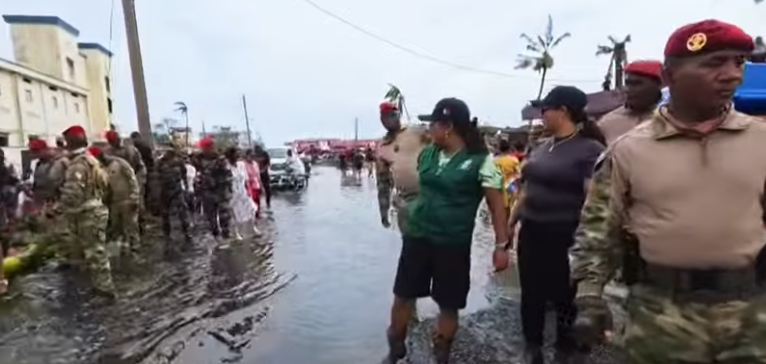
Cyclone Gezani made landfall late Tuesday night, bringing destructive winds, torrential rainfall, and dangerous storm surges across eastern Madagascar. Toamasina — a key port city with a population of roughly 400,000 — was among the hardest hit.
Homes were flattened, roofs torn off, power lines snapped, and major roads submerged under floodwaters. Entire districts were plunged into darkness as electricity grids collapsed.
Madagascar’s disaster management agency confirmed at least 38 fatalities, dozens of serious injuries, and more than 12,000 people displaced or directly affected.
Residents described the storm as “monstrous,” recounting how families sheltered indoors for hours as violent winds shattered windows and rising floodwaters forced evacuations.
Back-to-Back Cyclones
Gezani struck just 11 days after Cyclone Fittia, which killed at least 14 people and displaced more than 31,000 others. The rapid succession of storms has intensified humanitarian concerns in the region.
Meteorologists say Gezani may rank among the strongest cyclones recorded in this part of the Indian Ocean during the satellite era. Scientists warn that warming ocean temperatures linked to human-induced climate change are fueling more intense and wetter tropical cyclones.
Warmer seas provide additional energy to storms, while rising sea levels increase the risk of severe coastal flooding.
Infrastructure in Ruins
Officials report that roughly three-quarters of Toamasina’s infrastructure — including roads, power grids, healthcare facilities, and supply routes — has sustained damage. Food distribution networks have been disrupted, medical services are limited, and fuel supplies are dwindling.
The government has appealed for urgent international assistance, stating that the destruction exceeds national response capacity.
Aid agencies are also monitoring the storm’s movement into the Mozambique Channel, where it could potentially regain strength and threaten neighboring Mozambique, which recently experienced floods displacing more than 700,000 people.
A Climate Vulnerability Crisis
Madagascar is considered one of the world’s most climate-vulnerable nations. Despite contributing minimally to global greenhouse gas emissions, the island nation faces disproportionate impacts from extreme weather events.
Many families live in fragile housing, lack storm-resistant infrastructure, and depend heavily on agriculture — a sector increasingly disrupted by erratic rainfall and cyclones.
Climate scientists emphasize that without rapid global emissions reductions and increased climate financing, storms like Gezani could become more frequent and destructive. They also call for stronger investment in early warning systems, resilient housing, and climate-proof infrastructure.
Long Road to Recovery
As rescue and relief efforts continue, recovery in Toamasina and surrounding regions could take years. For many residents, the storm has not only destroyed homes but also livelihoods.
Experts warn that without urgent global climate action, disasters of this magnitude may become increasingly common, particularly for vulnerable island nations like Madagascar.